
Being diagnosed with keratoconus can feel overwhelming. Blurry vision, ghosting, glare, and rapidly changing prescriptions often make everyday tasks frustrating. Glasses may no longer provide clear vision, and soft contact lenses may feel unstable or ineffective.
The good news is that advanced specialty contact lenses can dramatically improve clarity and stability.
At Focal Pointe Eye Care in West Chester, Ohio, Dr. Michael Lyons specializes in fitting scleral lenses for keratoconus. Patients throughout the greater Cincinnati area trust our team for customized solutions that restore functional, comfortable vision.
WHAT IS KERATOCONUS?
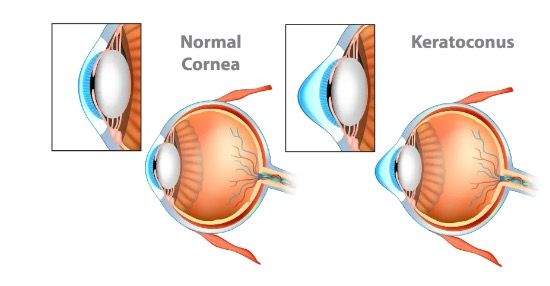
Keratoconus is a progressive corneal condition in which the normally round cornea becomes thin and begins to bulge into a cone-like shape. This irregular shape prevents light from focusing properly on the retina.
As keratoconus progresses, patients may experience:
- Blurred or distorted vision
- Ghosting or double images
- Increasing astigmatism
- Frequent prescription changes
- Light sensitivity
- Glare and halos, especially at night
Keratoconus often begins in the teenage years or early adulthood and may continue progressing for several years.
WHY DON'T GLASSES WORK FOR KERATOCONUS ?
In early stages, glasses may provide acceptable vision. However, as the cornea becomes more irregular, traditional lenses cannot correct the distortion caused by the uneven surface.
Soft contact lenses also conform to the irregular cornea, which means they do not neutralize the distortion.
This is where scleral lenses become a powerful treatment option.
HOW DO SCLERAL LENSES HELP KERATOCONUS?
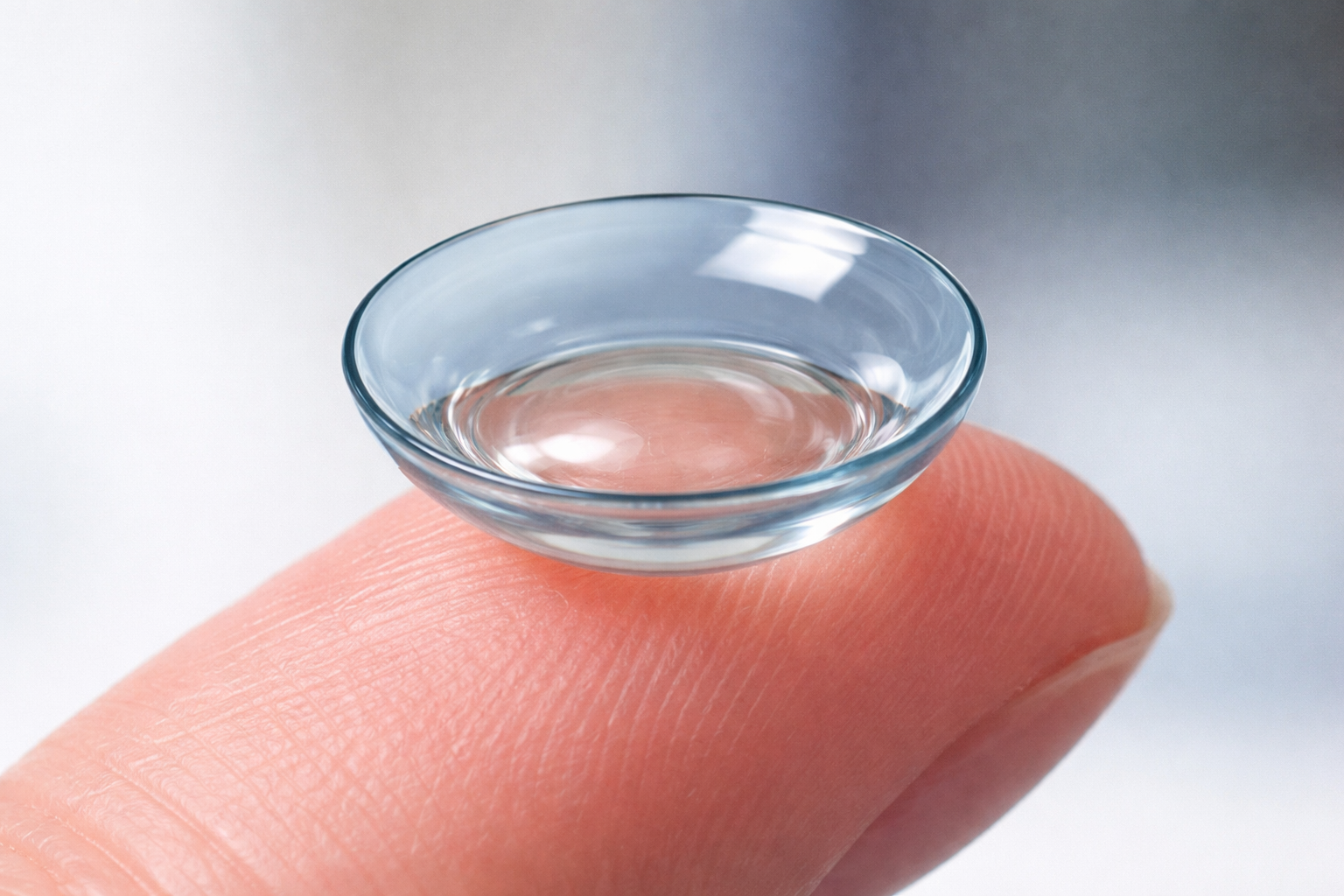
Scleral lenses for keratoconus are large-diameter specialty contact lenses that vault completely over the cornea and rest on the white part of the eye (the sclera).
Because the lens does not touch the cone-shaped cornea, it creates a smooth optical surface. The fluid reservoir beneath the lens fills in the irregularities of the cornea, allowing light to focus properly.
This results in:
- Sharper visual clarity
- Reduced ghosting and distortion
- Improved contrast sensitivity
- Greater stability throughout the day
- Enhanced comfort compared to traditional rigid lenses
Many patients with keratoconus achieve dramatically better vision with scleral lenses compared to glasses or soft contacts.

"This photo represents my example of still being able to enjoy and adapt to life. I take daily walks around our neighborhood pond and get to share my pictures. This photo consists of three photos layered together to express what contact lenses have given me. Without this little lens, my life would have been so much different."
Carl T. Domke
ARE SCLERAL LENSES COMFORTABLE?
Yes. Although scleral lenses are larger than traditional contact lenses, they rest on the sclera, which is less sensitive than the cornea.
Compared to small rigid gas permeable (RGP) lenses, scleral lenses tend to offer:
- Greater stability
- Less movement with blinking
- Improved comfort
- Reduced lens awareness
For many keratoconus patients, scleral lenses are both clearer and more comfortable than previous lens designs.
WHAT ABOUT CORNEAL CROSS-LINKING?
Corneal cross-linking is a procedure designed to slow or halt the progression of keratoconus. While cross-linking stabilizes the cornea, it does not reverse existing distortion.
Even after cross-linking, many patients still require specialty contact lenses for optimal vision correction.
Scleral lenses are often an ideal option both before and after cross-linking treatment.
Schedule an Eye Exam
WHAT TO EXPECT DURING A KERATOCONUS CONSULTATION
At Focal Pointe Eye Care, evaluation for scleral lenses for keratoconus includes:
- Comprehensive eye examination
- Corneal topography and imaging
- Measurement of corneal thickness and shape
- Diagnostic scleral lens fitting
- Follow-up visits to refine fit and optimize clarity
Dr. Michael Lyons has advanced training in specialty contact lens fitting and carefully customizes each lens based on the unique shape of your cornea.
Multiple visits are often necessary to fine-tune the fit and ensure long-term success.
FREQUENTLY ASKED QUESTIONS ABOUT SCLERAL LENSES FOR KERATOCONUS
Can scleral lenses cure keratoconus?
No. Scleral lenses correct the vision caused by corneal irregularity but do not cure the underlying condition.
Will I still need glasses?
Most patients achieve their best vision while wearing scleral lenses and do not require glasses over them.
Are scleral lenses covered by insurance?
We know insurance coverage for scleral lenses isn’t always straightforward—especially when medical and vision benefits are involved. It can be confusing. That’s why our team at Focal Pointe Eye Care is here to help. We take a closer look at your benefits, explore your options, and walk you through it step by step so you feel informed and supported.
Can scleral lenses prevent a corneal transplant?
While not a guarantee, scleral lenses often help patients maintain functional vision and may delay or reduce the need for surgical intervention.
ADVANCED KERATOCONUS TREATMENT IN WEST CHESTER, OHIO
If you have keratoconus and live in West Chester or the greater Cincinnati area, scleral lenses may provide the clarity and stability you have been searching for.
Clear, stable vision is possible—even with keratoconus.
Schedule a specialty contact lens consultation at Focal Pointe Eye Care to learn whether scleral lenses are the right solution for you.