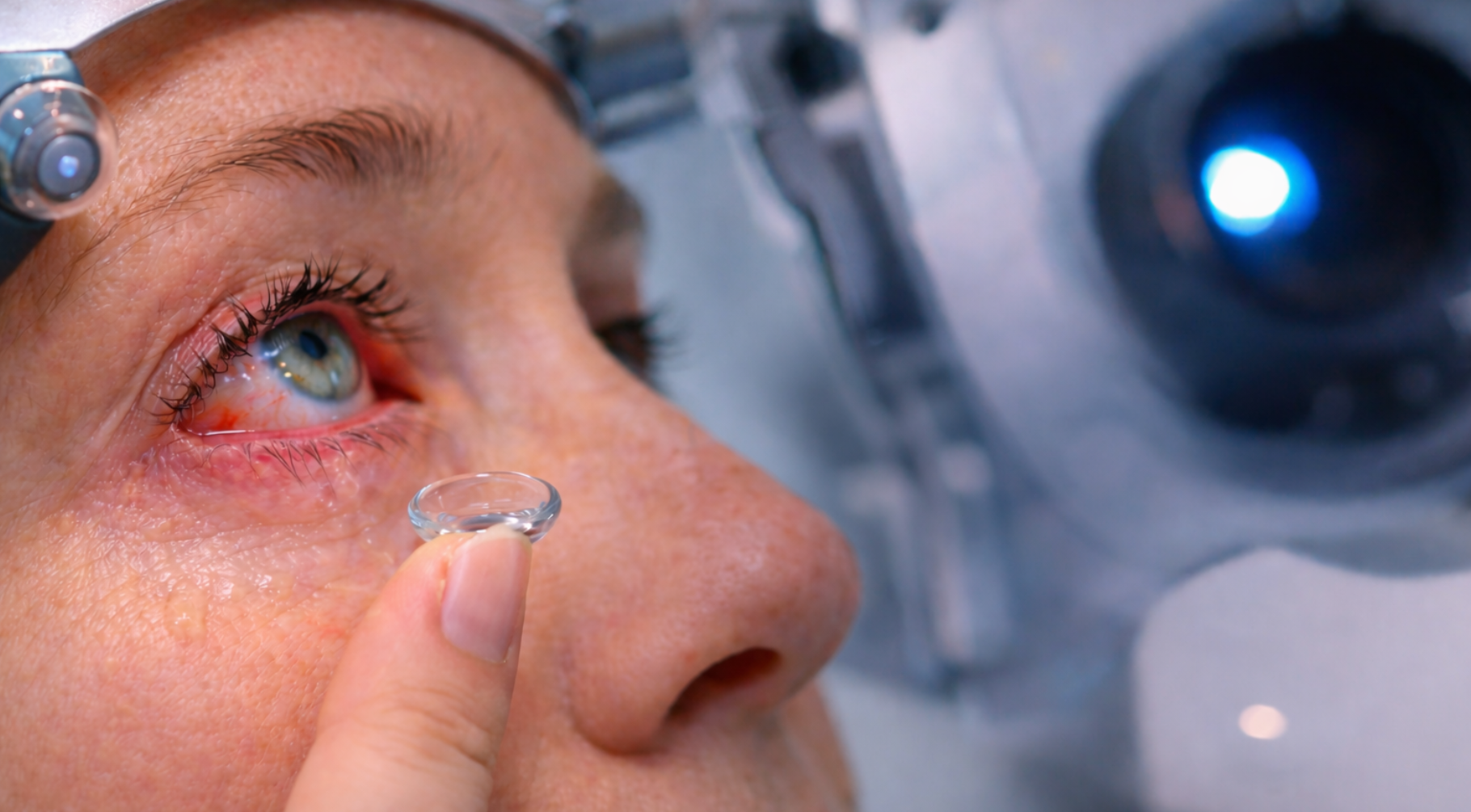
LASIK, PRK, and other refractive surgeries are designed to reduce dependence on glasses and contact lenses. For many patients, the results are life-changing. However, one of the most common side effects after refractive surgery is dry eye disease.
If you are experiencing dryness, burning, fluctuating vision, or light sensitivity after surgery, you are not alone. Our team at Focal Pointe Eye Care is here to help you understand why this happens — and more importantly — how we can treat it.
WHY DOES DRY EYE OCCUR AFTER LASIK OR PRK?
Refractive surgery reshapes the cornea to correct vision. During the procedure, microscopic corneal nerves are disrupted. These nerves play a critical role in tear production and blink reflex.
When the nerves are temporarily or permanently affected, the eyes may:
- Produce fewer tears
- Produce lower-quality tears
- Have reduced sensation (meaning dryness may be severe even if symptoms seem mild)
- Struggle to maintain a stable tear film
This leads to post-surgical dry eye disease.
For many patients, symptoms improve over several months. For others, dryness can become chronic and require long-term management.
COMMON SYMPTOMS OF POST-REFRACTIVE SURGERY DRY EYE
You may notice:
- Burning or stinging
- Grittiness or foreign body sensation
- Fluctuating or blurred vision
- Light sensitivity
- Excess tearing (a reflex response to dryness)
- Discomfort with contact lenses
- Difficulty driving at night
It is important to understand that blurred or fluctuating vision after surgery is often related to tear instability — not a failure of the surgical outcome itself.
WHO IS AT HIGHER RISK?
Certain patients are more likely to develop dry eye after refractive surgery:
- Those with pre-existing dry eye disease
- Patients with autoimmune conditions
- Contact lens wearers
- Individuals with meibomian gland dysfunction
- Patients who spend significant time on screens
Pre-surgical dry eye is one of the most important predictors of post-surgical complications. This is why comprehensive dry eye evaluation before surgery is critical.
Schedule an Eye Exam
HOW WE EVALUATE DRY EYE AFTER SURGERY
At Focal Pointe Eye Care, we utilize advanced diagnostic tools to understand the root cause of your symptoms.
Your evaluation may include:
- Tear film analysis
- Meibomian gland imaging
- Corneal staining
- Inflammatory testing
- Assessment of nerve function
- Evaluation for neurotrophic keratitis
Dry eye after refractive surgery is rarely “just dryness.” It often involves inflammation, gland dysfunction, or nerve changes. Identifying the underlying mechanism allows us to customize treatment.
TREATMENT OPTIONS FOR POST-SURGICAL DRY EYE
Treatment is tailored to your specific condition and severity. Options may include:
Prescription anti-inflammatory drops to reduce ocular surface inflammation
Preservative-free artificial tears to support the tear film
Punctal plugs to retain natural tears
Intense Pulsed Light (IPL) therapy to improve meibomian gland function
Nerve-supportive therapies in cases of reduced corneal sensation
Scleral lenses, which create a fluid reservoir over the eye, providing continuous hydration and visual stability
Amniotic membrane contact lenses (AMCLs)-act as a biological bandage that protects the cornea, reduces inflammation, and promotes healing of the eye’s surface in severe dry eye.
Scleral lenses can be life-changing for patients with severe post-LASIK dry eye, offering comfort and clear vision when other treatments have failed.
IS DRY EYE PERMANENT AFTER LASIK?
For many patients, symptoms improve within 6–12 months as corneal nerves regenerate. However, some individuals develop chronic dry eye disease that requires ongoing management.
The good news is that dry eye is treatable.
With proper care, most patients can achieve significant symptom relief and restore comfortable, stable vision.
Frequently Asked Questions About Dry Eyes After Refractive Surgery
Is dry eye normal after LASIK or PRK?
Yes. Dry eye is one of the most common side effects after refractive surgery. Temporary dryness occurs because corneal nerves that help regulate tear production are disrupted during the procedure.
For many patients, symptoms improve within several months. However, some individuals develop chronic dry eye that requires ongoing management.
How long does dry eye last after LASIK?
Most patients notice improvement within 3–6 months as corneal nerves begin to regenerate. In some cases, symptoms can last 6–12 months.
If dryness persists beyond that timeframe, it may indicate underlying inflammation or meibomian gland dysfunction that needs treatment.
Why is my vision blurry after LASIK even though the surgery was successful?
Fluctuating or blurry vision after LASIK is often related to tear film instability — not the surgical correction itself.
When the tear film is uneven, light entering the eye becomes distorted, leading to temporary blur, glare, or halos. Treating the dryness often improves visual stability significantly.
Can dry eye after LASIK become permanent?
In some patients, yes. While many cases improve with time, others develop chronic dry eye disease.
The good news is that chronic dry eye is treatable. With advanced therapies and proper monitoring, we can greatly reduce symptoms and protect the surface of the eye.
What treatments are available for dry eye after refractive surgery?
Treatment depends on the severity and root cause. Options may include:
- Prescription anti-inflammatory eye drops
- Preservative-free artificial tears
- Punctal plugs
- TearCare® or Intense Pulsed Light (IPL) therapy
- Scleral lenses for severe cases
Scleral lenses are especially effective because they create a fluid reservoir over the cornea, providing continuous hydration and stable vision.
Are scleral lenses safe after LASIK?
Yes. Scleral lenses do not rest on the cornea. Instead, they vault over it and rest on the white part of the eye (the sclera).
This design protects the cornea while delivering constant moisture, making them an excellent option for patients with severe post-LASIK dry eye or corneal surface irregularities.
Should dry eye be treated before refractive surgery?
Absolutely. Pre-existing dry eye is one of the strongest predictors of post-surgical complications.
Comprehensive dry eye evaluation and treatment before surgery can significantly improve outcomes and reduce the risk of chronic symptoms.
When Should You Seek Care?
If you are experiencing persistent dryness, blurred vision, or discomfort months after refractive surgery, do not assume this is something you “just have to live with.”
Early intervention can prevent long-term surface damage and improve surgical satisfaction.
Dr. Lyons and Dr. Fisher specialize in advanced dry eye diagnosis and treatment. We are committed to helping you protect your vision and comfort for the long term.
Ready to feel comfortable again?
Schedule your evaluation today.